Your Voice
Locally hosted language models that write documents in your own voice

Generic model output is easy to spot: the same openings, the same hedging, the same rhythm. Your Voice gives a locally hosted model examples of how you actually write, so the documents it produces sound like you rather than like a model.
Your Voice downloads models from the Hugging Face Hub and serves them with runtimes such as llama.cpp, vLLM, SGLang, Ollama, LM Studio or Strata. Any runtime that exposes an OpenAI compatible chat completions API with tool calling can be added, either launched by the application or connected to while already running.
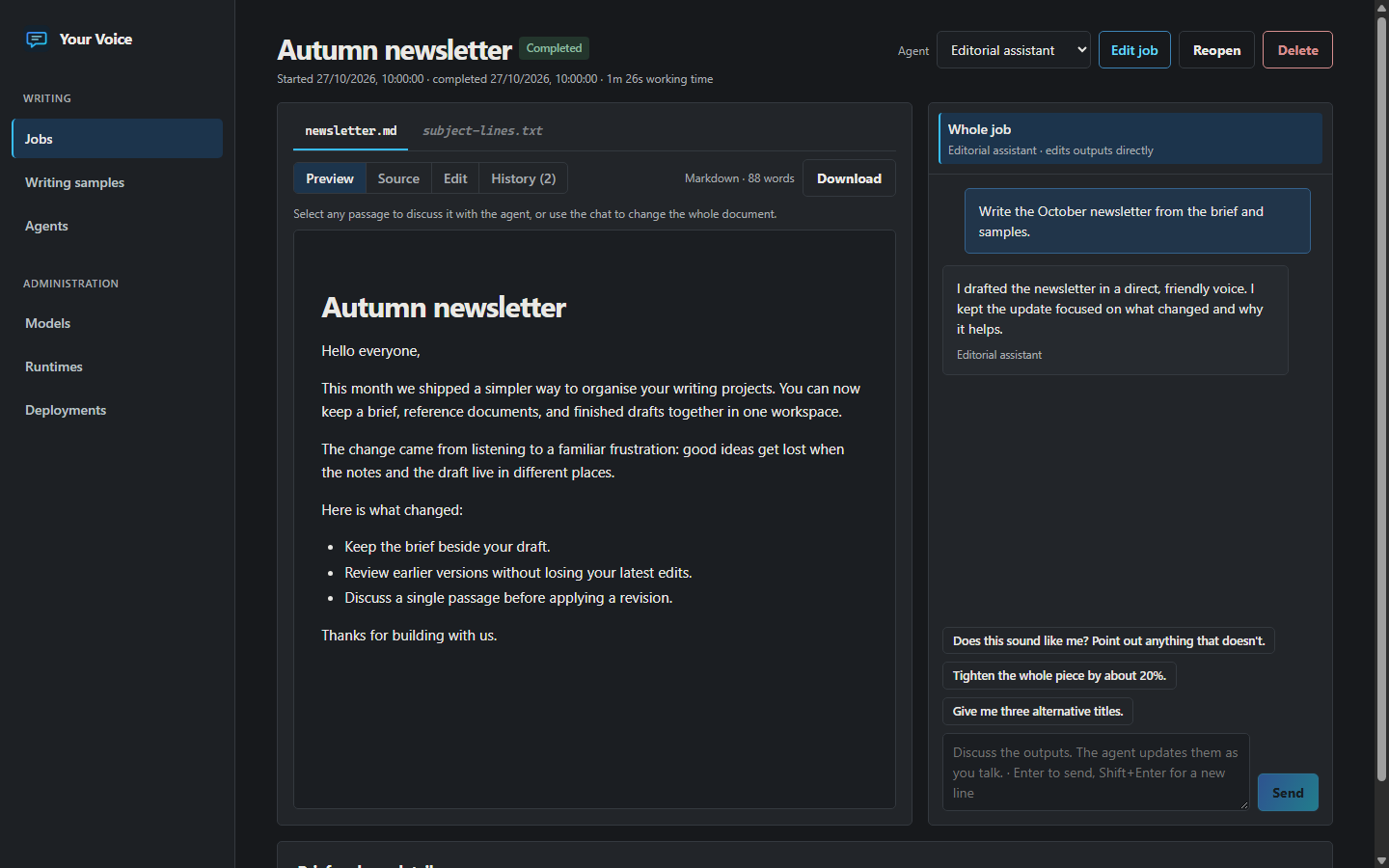
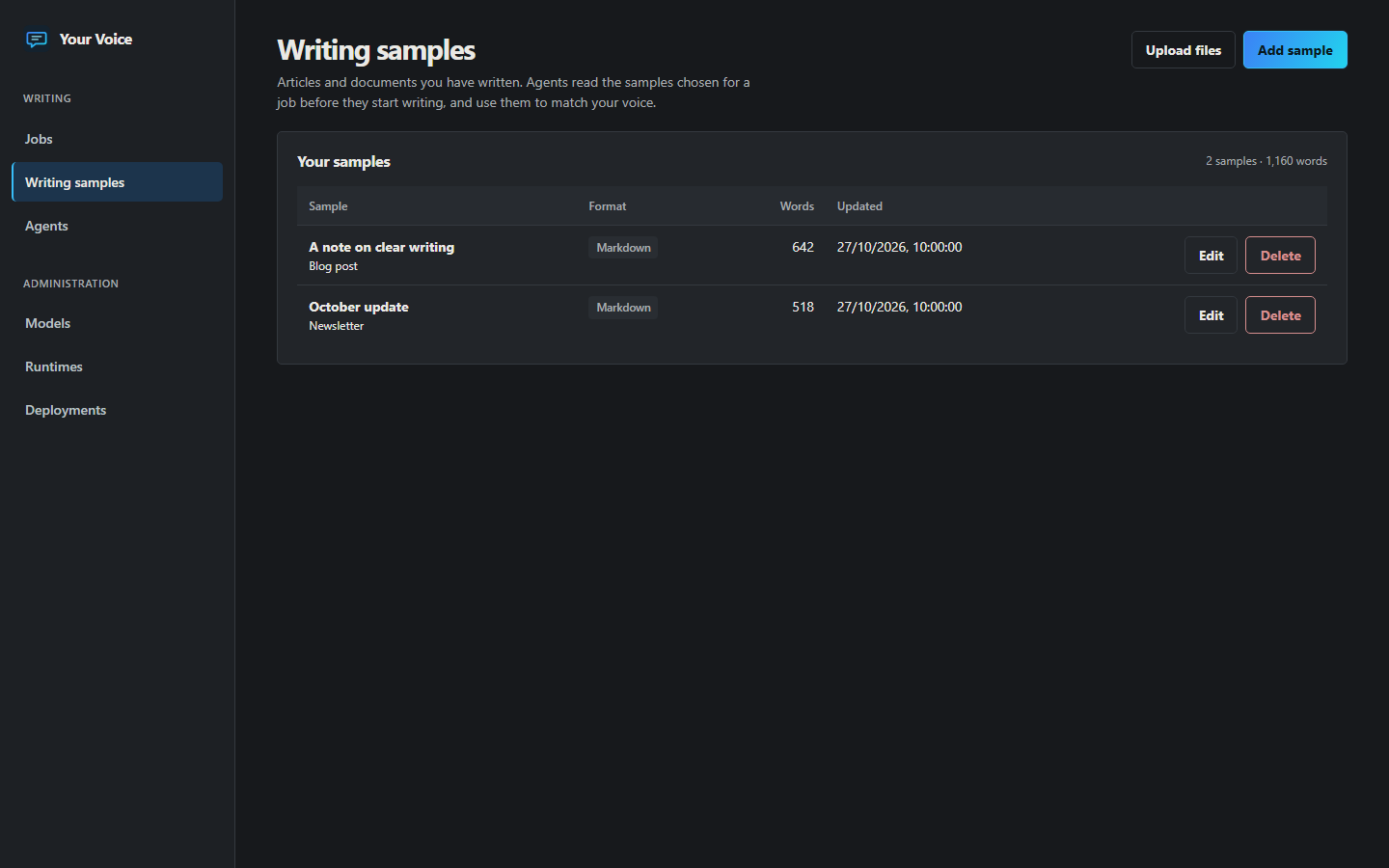
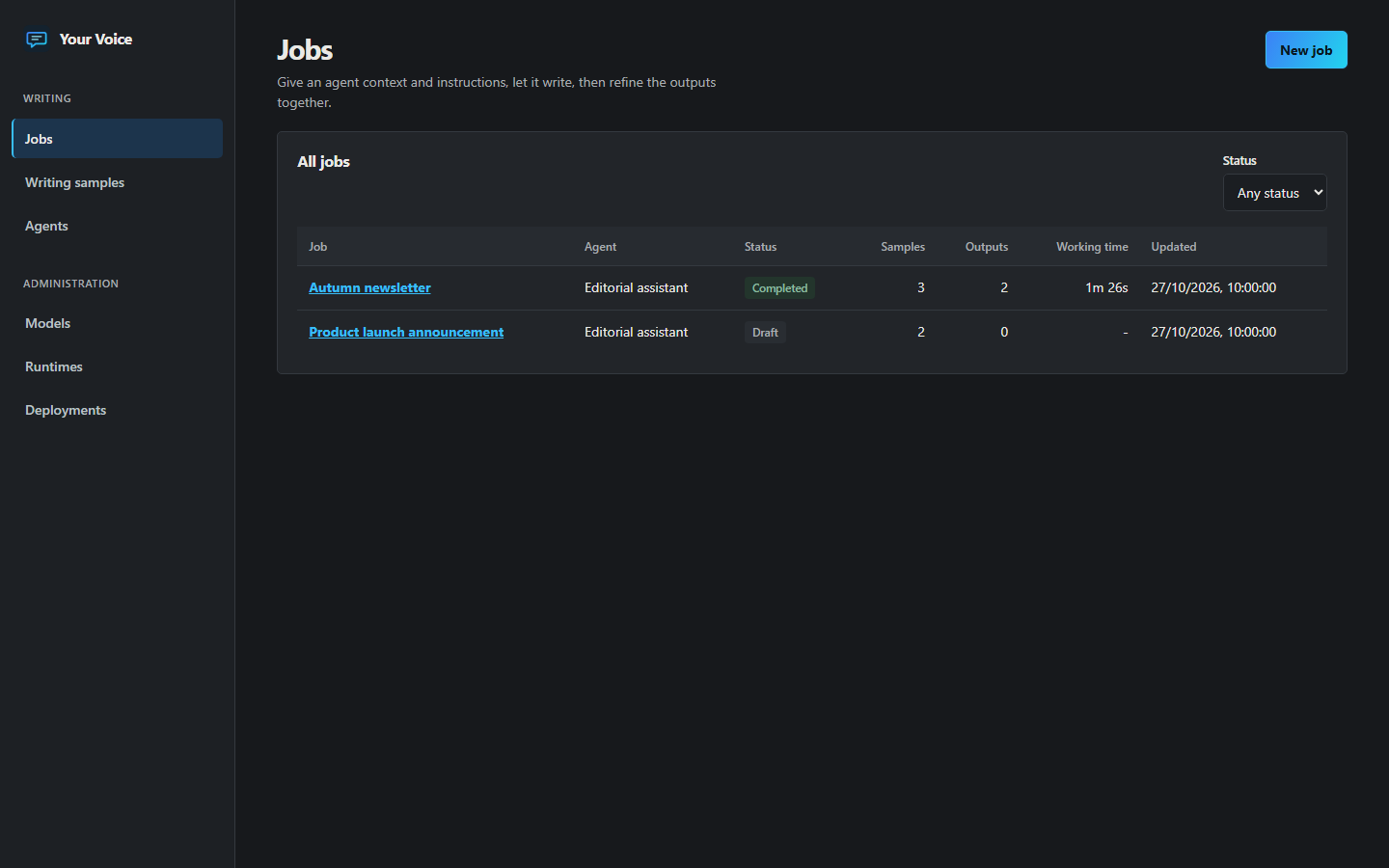
You add writing samples, such as articles and documents you have written, then create a job with the context and instructions for the piece and the outputs you need in Markdown, HTML or plain text. A deployed model is assigned to the job as a writing agent. It must read every chosen sample before it is allowed to write, then reads the context and produces each output while you watch the documents appear.
Refining the result is a conversation. Select any passage to discuss it with the agent, which proposes a revision that is only applied when you approve it, or talk through the whole job and let the agent edit the outputs directly. Every change is kept as a revision that can be viewed and restored, and every conversation, tool call and revision is stored in the database.
More in Local AI Models.
 Bug Hunt Benchmark
A browser application that downloads models from the Hugging Face Hub, serves them with local runtimes, and scores how well each model finds and fixes deliberate defects in small projects.
 Qwen3.8 Claude Code
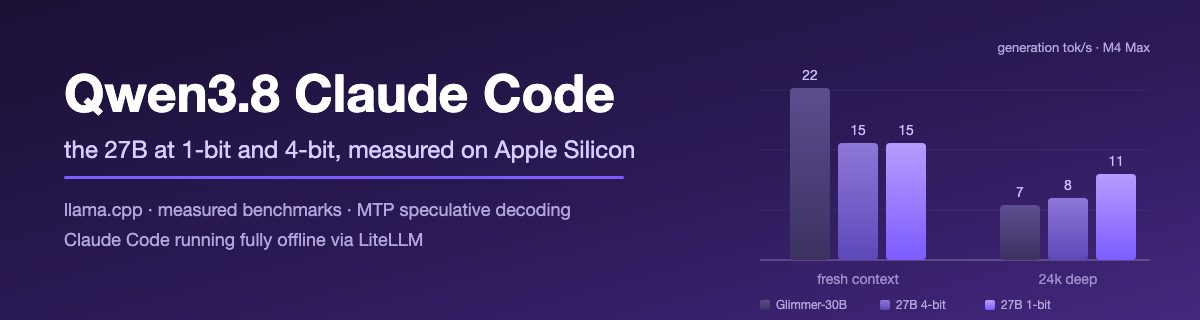
Qwen3.8-27B served locally with llama.cpp at 4-bit and 1-bit, benchmarked with and without MTP speculative decoding, and connected to Claude Code through LiteLLM.
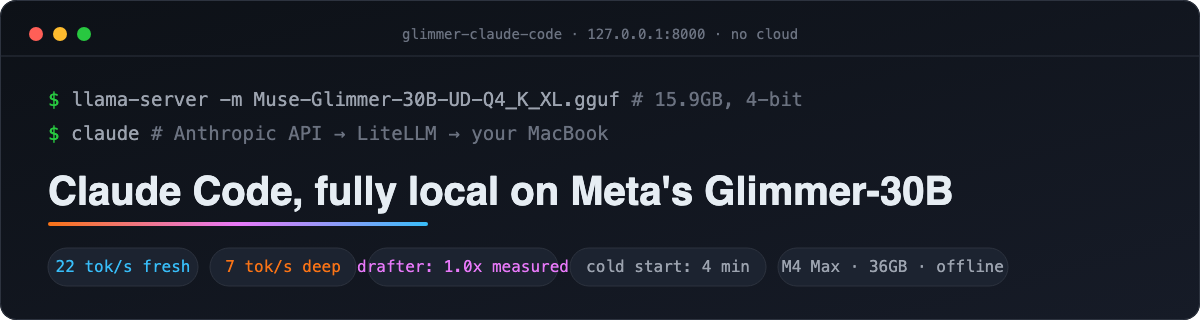 Muse-Glimmer-30B Claude Code
Muse-Glimmer-30B served locally with llama.cpp on an M4 Max, benchmarked with and without dflash speculative decoding, and connected to Claude Code through LiteLLM.
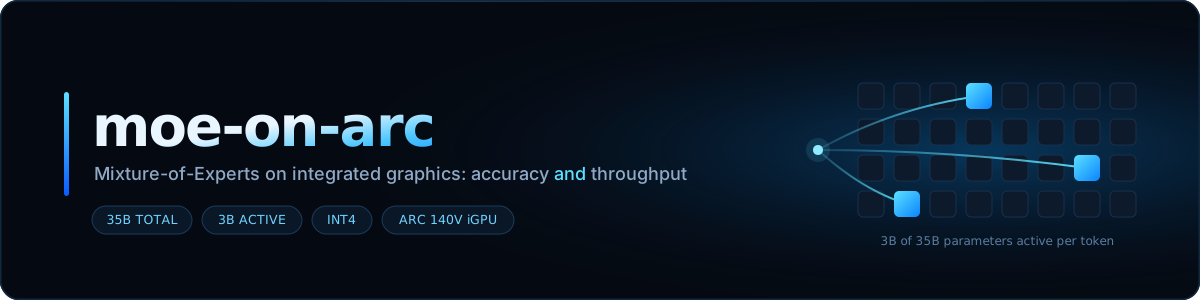 MoE on Arc
A benchmark harness that measures accuracy and throughput together, with a verified configuration for Qwen3.6-35B-A3B on an Intel Arc 140V integrated GPU through OpenVINO Model Server.
Let us build your future
Bring us a plan or just an idea. We will arrange a discovery meeting with you to go through it.